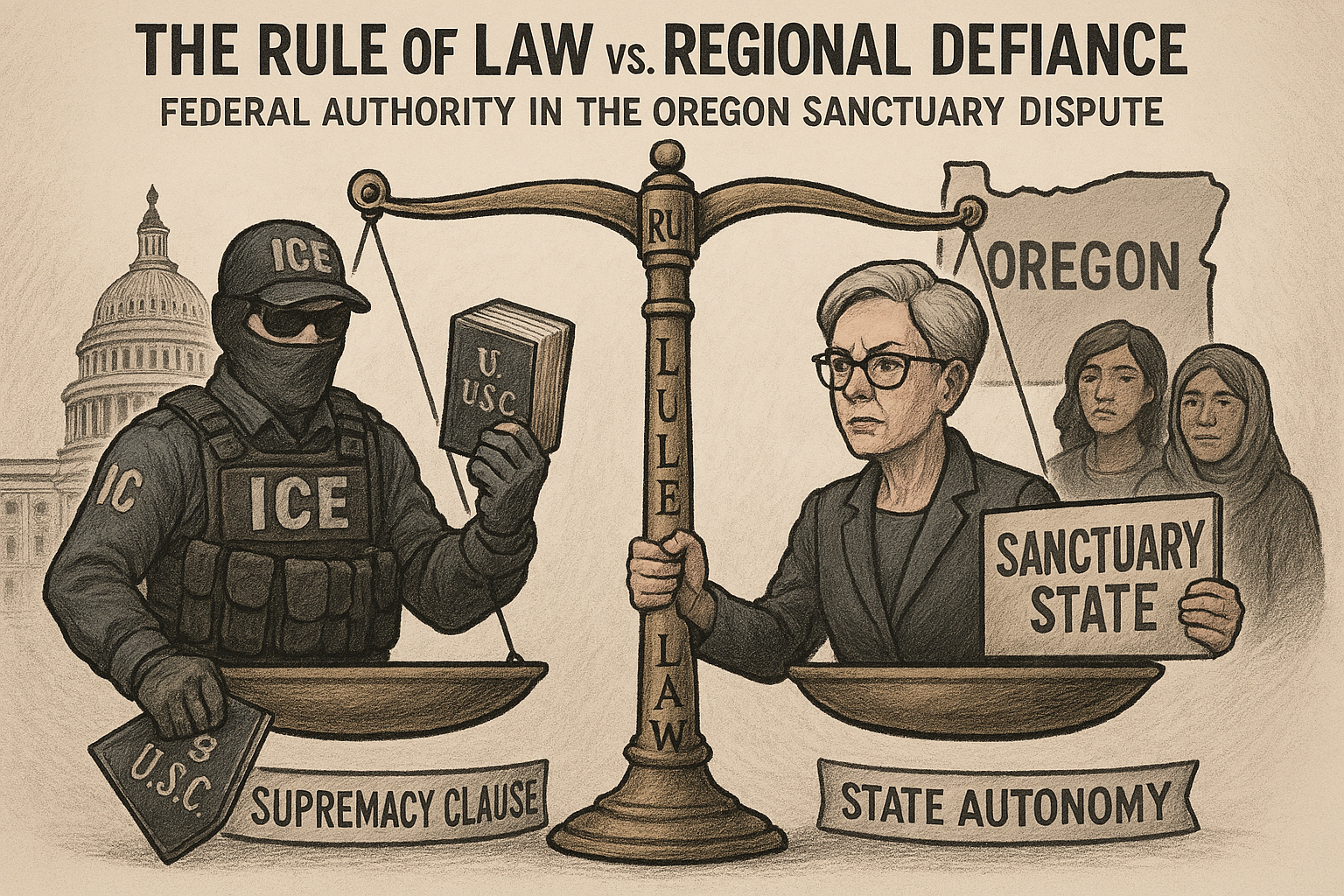
In a recent formal letter, Governor Tina Kotek and 31 Oregon mayors demanded an immediate moratorium on all federal immigration enforcement within the state until recent lethal-force incidents in Portland and Minneapolis are fully investigated.
The leaders argued that aggressive federal tactics have created a “moral opposition” and a climate of fear that destabilizes local economies and prevents residents from accessing healthcare and education. By reaffirming Oregon’s sanctuary laws, the letter delivers an ultimatum: federal practices must change immediately to respect state autonomy and the safety of immigrant communities.
From a Federal Enforcement Perspective:
This demand is seen as an unconstitutional attempt to obstruct the Supremacy Clause and prevent agents from fulfilling their congressional mandate to remove criminal fugitives. Enforcement advocates rely on the following legal pillars and recent 2025–2026 court victories:
- Supreme Court Precedent (Noem v. Vasquez Perdomo, 2025): The Supreme Court recently stayed lower court orders that attempted to block federal “at-large” arrests. This ruling effectively signaled that the executive branch has broad discretion to conduct enforcement operations including the use of masked agents and tactical sweeps based on “reasonable suspicion” in high-risk areas.
- Rejection of State “Pauses” (Minnesota v. DHS, 2026): Just days ago, a federal judge denied a request to halt “Operation Metro Surge” in the Twin Cities. The court found that states cannot use the 10th Amendment to “micromanage” federal law enforcement or force a total cessation of operations based on local political or social concerns.
- Mandatory Enforcement (8 U.S.C. § 1357): Federal law grants ICE agents the explicit authority to arrest suspects without a warrant if they are likely to escape. Enforcement proponents argue that a governor-mandated “pause” would force agents to violate this federal statute, prioritizing local sanctuary policies over national security and the rule of law.
- The “Sanctuary” Conflict: Federal supporters argue that if Oregon cities cooperated with detainer requests in secure jail settings, agents would not be forced to conduct the public, high-stakes arrests that the mayors are currently protesting.
Enforcement Stance:
State leaders cannot pick and choose which federal laws apply within their borders. A ‘pause’ on enforcement is not a safety measure it is a sanctuary for those who have already bypassed our legal system.