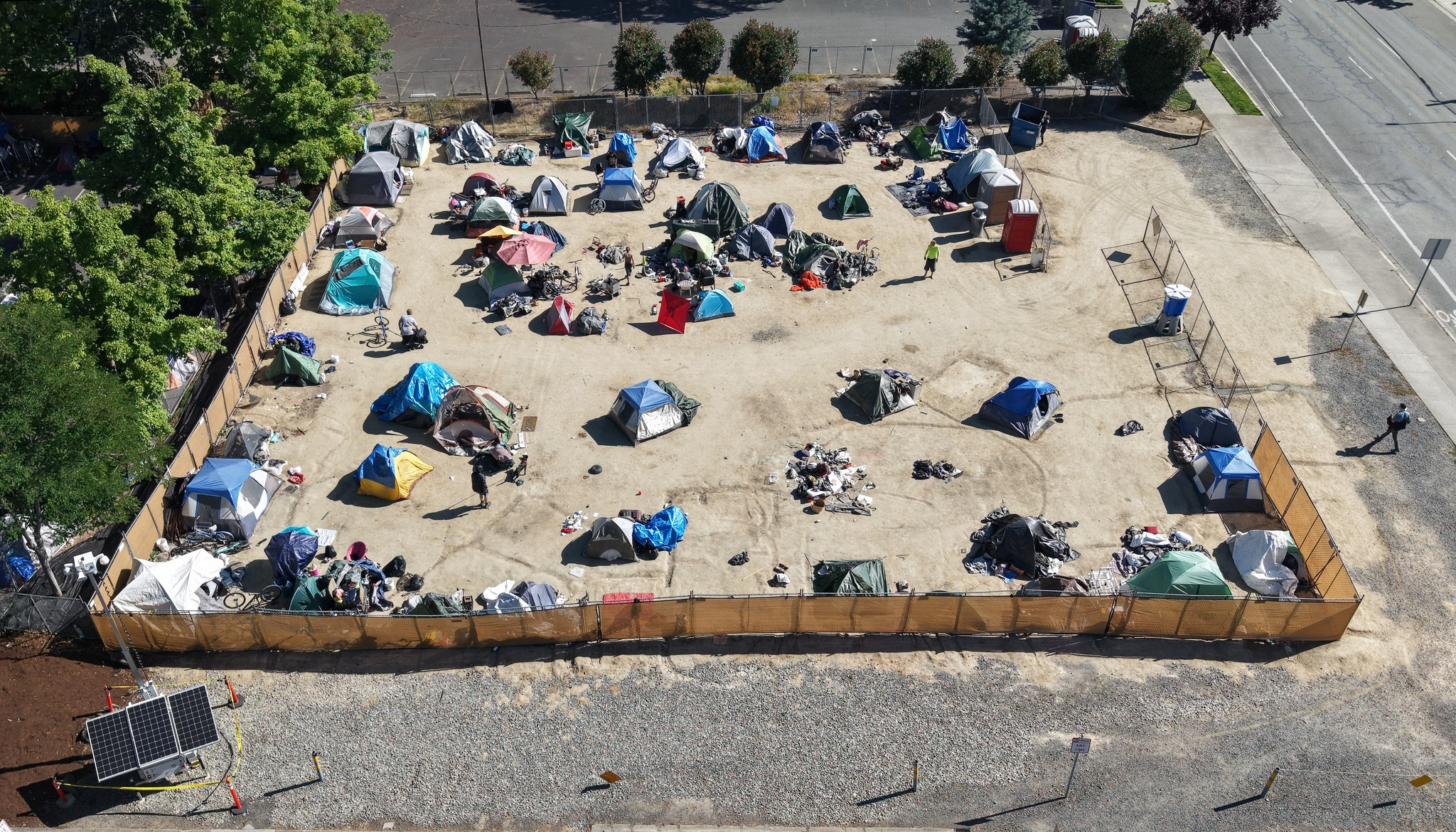
I often see posts in local social media groups about how Bend and other Oregon cities look so much cleaner and don’t seem to face the same visible homelessness crisis we do here in Grants Pass. After looking into it, the short answer comes down to funding and shelter infrastructure. Bend has the resources to provide enough managed shelters and designated sites to transition people off the streets, which prevents the high level of visible negativity we experience here in Grants Pass.
I’m not advocating for spending more money on homelessness; I’m simply pointing out the differences between cities like Grants Pass and Bend. In fact Portland is a prime example of the more money you spend the worse the outcome is. Oregon ranks near the top around fourth in homelessness nationwide, which shows we could be doing much better. Our progress is largely tied up by state laws like HB 3115 and SB 48. In contrast, neighboring Idaho ranks much lower for homelessness because they don’t tolerate lawlessness and aren’t hindered by these kinds of regulations.
The biggest concern I have is with the new Parker shelter how will this solve the constant ongoing issue regarding the lawlessness we have faced for years now.
Comparing Bend and Grants Pass regarding homelessness reveals stark differences in visual appearance, resources, and policy execution. While it can seem like Bend has “so few” homeless individuals because its streets and parks are visually clearer, data shows a different story.
The differences between the two cities stem from a combination of funding, shelter infrastructure, and geographic layout, rather than a difference in how they execute state laws like SB 48.
1. The Numbers vs. The Visual Reality
The perception that Bend has very few unhoused people is actually a structural illusion. According to the Point-in-Time (PIT) counts, both cities face significant challenges, but they manage them in entirely different ways.
- Bend (Deschutes County): In recent counts, Bend has roughly 1,000 unhoused individuals. However, Bend has aggressively scaled up its indoor shelter capacity (such as the Lighthouse Navigation Center and various managed outdoor camps/villages). A massive portion of Bend’s unhoused population is sheltered, keeping them off the immediate downtown streets and sidewalks.
- Grants Pass (Josephine County): Grants Pass has a smaller total unhoused population in terms of sheer numbers, but historically, a much higher percentage has been unsheltered. Because Grants Pass lacked a low-barrier, city-funded walk-in shelter for years, the unhoused population was highly visible in public parks and downtown spaces.
2. Does SB 48 (Pretrial Release) Play a Role?
Oregon Senate Bill 48 (2021) fundamentally reformed the state’s bail system. It moved Oregon away from a “money bail” system (where people could buy their way out of jail) to a risk-based pretrial release system. Under SB 48:
- People arrested for low-level, non-violent offenses (like minor trespassing, shoplifting, or standard failure-to-appear charges) are generally released on their own recognizance or with specific conditions, rather than being held in jail just because they can’t afford bail.
- People arrested for violent felonies or serious person-crimes are held until they see a judge.
Why SB 48 Impacts Cities Differently
SB 48 applies uniformly across the entire state of Oregon, meaning both the Deschutes County Circuit Court (Bend) and the Josephine County Circuit Court (Grants Pass) follow the exact same state framework. However, the local environment changes how the effects of that law are felt.
- Jail Capacity and Resource Gaps: Josephine County has historically struggled with steady, long-term funding for its jail and local law enforcement compared to wealthier counties. When individuals are released under SB 48 protocols for minor offenses in an area with few behavioral health resources or shelter beds, they immediately return to the same public spaces.
- Pretrial Services Infrastructure: Bend (Deschutes County) has a more robustly funded Pretrial Services division within its Sheriff’s Office. They are better equipped to track, assess, and provide check-in mandates for individuals released pretrial. Wealthier municipalities can pair pretrial release with navigation centers, mental health diversion teams, and case management.
3. The Real Differentiator: Funding and Infrastructure
The primary reason Bend appears cleaner and more controlled than Grants Pass comes down to municipal wealth and the local approach to the landmark legal battle, Grants Pass v. Johnson.
The “Grants Pass” Legal Framework
Grants Pass became the epicenter of national homelessness policy. The city attempted to enforce strict anti-camping ordinances to keep people out of public parks. The resulting lawsuits eventually went to the U.S. Supreme Court, which ruled that cities can penalize public camping even if there isn’t enough shelter space.
However, because Grants Pass lacked public, low-barrier shelter options for so long, the legal gridlock forced the city to allow temporary encampments in specific parks while the court battles raged, concentrating the population in highly visible public areas.
Bend’s Managed Approach
Bend has a significantly larger tax base, driven by high property values and tourism. The City of Bend chose a strategy focused on aggressive diversification of shelter infrastructure:
- Low-Barrier Shelters: Bend established several hundred low-barrier shelter beds, meaning people can enter without strict prerequisites that might otherwise turn them away (like sobriety requirements or bans on pets).
- Managed Outdoor Communities: Instead of unmanaged tent encampments in public parks, Bend funded structured, managed outdoor sites and transitional housing villages.
- Time, Place, and Manner Ordinances: Because Bend actively provides alternative shelter options, it can strictly enforce local “time, place, and manner” ordinances. They can legally clear unmanaged sidewalks and public right-of-ways because they have designated places or shelter beds to direct individuals toward.
Summary
Bend isn’t unaffected by homelessness or state laws like SB 48; its unhoused population is actually quite large. The visual cleanliness of Bend is the result of heavy financial investment in low-barrier shelters, managed sites, and a large multi-agency safety net that transitions people off public sidewalks. Grants Pass, facing tighter local budgets and years of complex federal litigation, has had fewer options to manage the visibility of its unsheltered population.