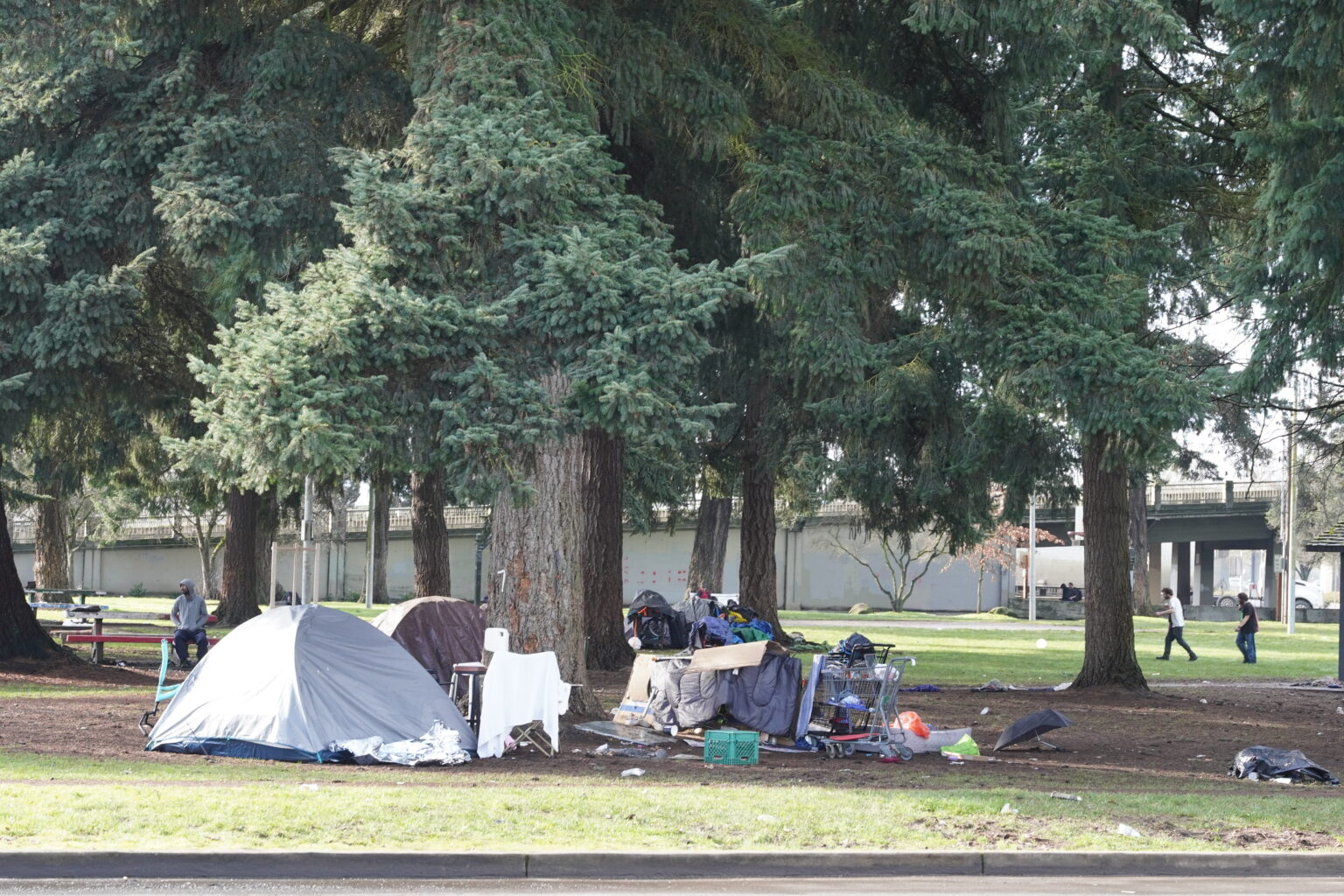
Oregon’s current strategy for handling homelessness has created significant challenges for local communities. State laws like HB 3115, which require local camping regulations to be “objectively reasonable,” have created legal uncertainty and contributed to costly litigation. State law does not require cities or counties to build and operate shelters, but when adequate shelter space is unavailable, enforcing restrictions on camping or sleeping in public spaces becomes legally complicated. Communities across Oregon are now forced to navigate these state requirements while balancing public safety, taxpayer costs, and the needs of vulnerable residents.
Voters should closely examine the candidates who want to lead local communities through this difficult environment.
Appointed Josephine County Commissioner and candidate Colene Martin indicated in a Jefferson Public Radio interview that she supports accepting state emergency funding for the homelessness crisis and expressed disappointment when the county previously declined certain funding opportunities.
While state funding can provide short-term resources, many fiscal conservatives argue that temporary programs can create long-term financial obligations once outside funding sources end.
State grants are often temporary. When those funding sources expire, local governments may face difficult decisions: continue funding programs with local taxpayer dollars or reduce or eliminate services that were created with temporary money. Critics argue that reliance on short-term state funding can reduce local flexibility, increase dependence on state priorities, and create pressure for future tax increases. State homelessness funding is generally restricted to homelessness-related purposes, such as shelter capacity and supportive services, rather than broader local government needs.
Real-World Lessons Across Oregon
Nearby jurisdictions demonstrate that accepting state money does not guarantee success and often shifts focus away from accountability:
Portland’s High-Cost Failure: High volumes of state and regional spending have failed to curb visible homelessness or restore economic vitality, proving that injecting state funds without strict enforcement measures yields poor returns for taxpayers.
Medford’s Focus on Enforcement: Medford demonstrated that the priority must remain on expanding local shelter options and enforcing public-order laws through municipal courts not simply relying on state grants to expand government operations.
A Fiscal Conservative Blueprint:
A fiscal conservative approach emphasizes limited government growth, measurable outcomes, and accountability.
Private Charities Over Permanent Bureaucracy: Fiscal conservatives argue that temporary government grants can evolve into permanent programs, creating future pressure on taxpayers. HB 3115 requires local camping regulations to be objectively reasonable, but it does not require local governments to construct or operate shelters. Communities can meet legal obligations by partnering with private, nonprofit, and faith-based organizations that provide shelter options and treatment-focused programs. The goal should be helping people move toward stability while maintaining standards for public behavior and community safety.
Redirect Funding Toward Results-Based Programs: Local governments should evaluate whether taxpayer-funded programs produce measurable results. Public dollars should prioritize programs that reduce unsheltered camping, increase treatment participation, improve public safety, and move people toward self-sufficiency rather than simply maintaining the status quo.
Strengthen Local Judicial Accountability: Municipal courts, authorized under ORS Chapter 221, can provide cities with another tool for addressing certain local ordinance violations. While municipal courts still operate within Oregon’s statewide legal framework, they can allow communities to manage some local enforcement matters more directly. A fiscal conservative approach emphasizes accountability measures such as restitution, cleanup work, and community service when appropriate, rather than relying solely on fines that often go unpaid.
The Bottom Line
A fiscal conservative approach protects business districts through strict zoning, shifts shelter responsibility to private charities, cuts off funding that enables street vagrancy, and enforces real accountability.
By supporting the acceptance of temporary state emergency money, appointed commissioner and candidate Colene Martin is embracing a short-term strategy that risks long-term tax burdens and expanded state influence. Voters seeking durable, principled solutions must decide whether this approach aligns with their vision for Josephine County’s future.
Given Colene Martin’s positions on state funding, government spending, and the role of government differ significantly from those of fiscal conservatives. Those policy differences help explain why Colene Martin received documented support from the Josephine County Democratic Party during her 2024 commissioner campaign. Voters must decide whether her record reflects the long-term direction they want for the county.
Disclaimer: Most citizens, myself included, willingly support those who genuinely need a helping hand. The frustration lies entirely with the chronic, drug-fueled vagrancy that drives our local crime rates and dominates our public spaces while refusing treatment and shelter.