Introduction
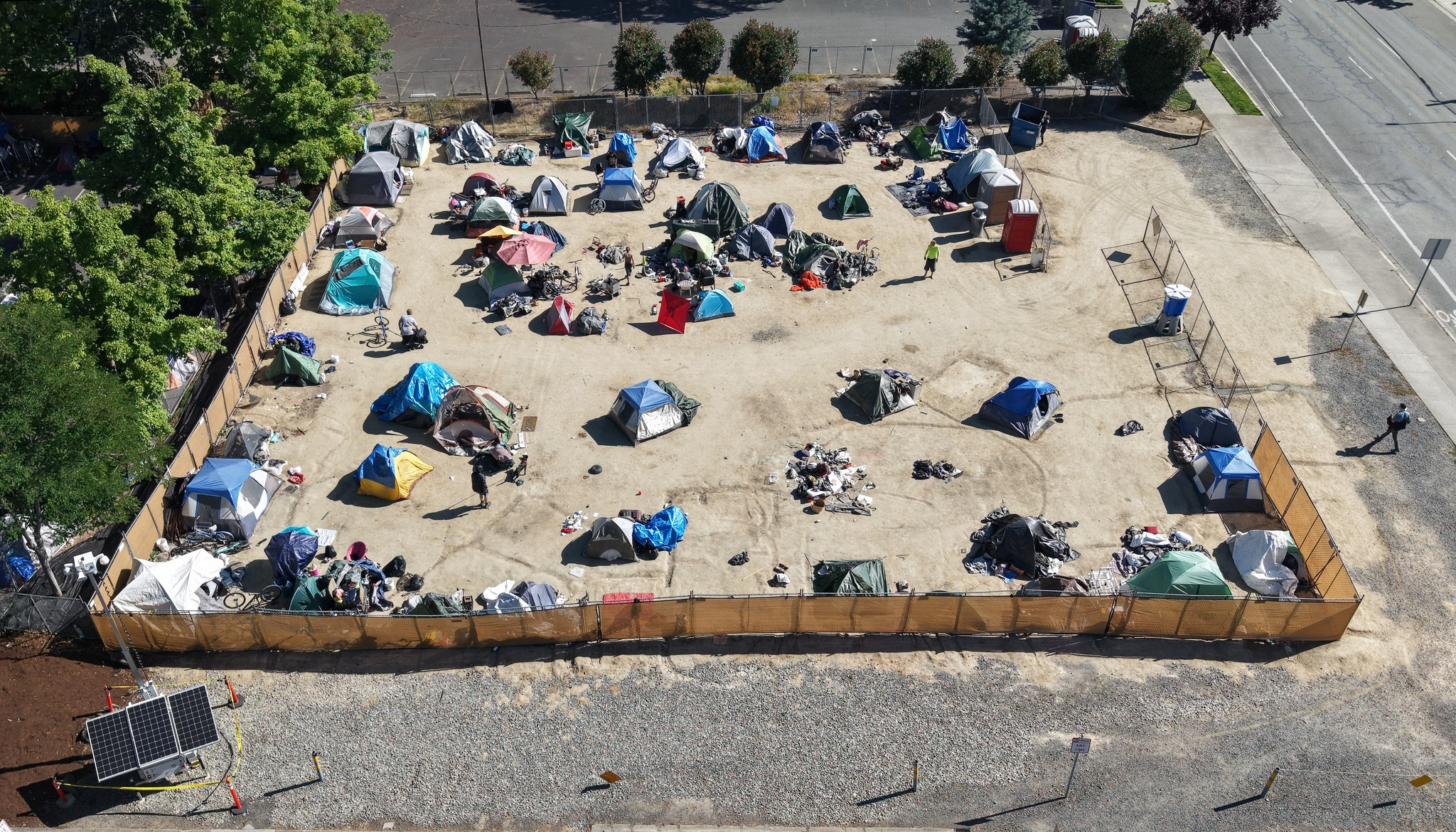
Following the phased opening of a new supervised shelter facility, the city of Grants Pass, Oregon, has closed two of its three authorized but unmanaged homeless encampments. The initiative shifts individuals into structured housing while transitioning away from unregulated public campsites that have drawn local concerns.
Camp Closures: Contractors have cleared two municipal campsites located near City Hall and the police headquarters after issuing 72-hour notices to occupants.
Remaining Site: A third, larger encampment situated at Sixth and A streets is still operational, though city officials intend to close it eventually.
New Facility Transition: The closures coincide with the staggered opening of Parker’s Place Village, a managed, $1.2 million container-room facility designed to house up to 150 people and offer social services.
Timeline Extensions: While 82 residents have moved into the new village, the facility missed its initial June 30 deadline to fill all 150 beds, prompting discussions between the city and contractors for a brief extension.
Legal and Cost Context: The temporary camps were established to meet legal requirements following extensive litigation regarding public camping laws. These unmanaged locations cost the city roughly $359,000 in 2025 due to maintenance, sanitation, and frequent police intervention.
Downtown Exclusion Zone and Pretrial Policy: The City Council unanimously passed an emergency ordinance effective immediately establishing a downtown civil exclusion zone from Fourth to Ninth streets between A Street and the Rogue River, allowing police to ban and arrest repeat offenders for trespassing. Alongside this, councilors approved a resolution calling for the modification or repeal of Oregon’s Senate Bill 48, arguing that the law’s pretrial release system fuels a “catch-and-release” cycle by routinely freeing individuals charged with serious crimes on their own recognizance.
Summary
Grants Pass is actively consolidating its homeless population by dismantling two unmanaged public campgrounds in favor of Parker’s Place Village, a new supervised housing development. Although the new facility requires a short timeline extension to reach its full 150-bed capacity, municipal leaders are pushing forward with the transition to mitigate the financial and safety burdens of unregulated sites while exploring stricter downtown behavioral ordinances.